Import Review

5 Screenshots geprüft. Nichts wurde automatisch als Karte übernommen.

new-card 0.11 existing / 0.12 inbox

97D91BF6-0757-4F7B-8A96-6CE366DC1E7D.PNG

Beste vorhandene Nähe: originale/04-meeting-moves.jpeg

Beste Inbox-Nähe: Bildschirmfoto 2026-08-30 um 18.08.57.heic

Erkannten Text anzeigen
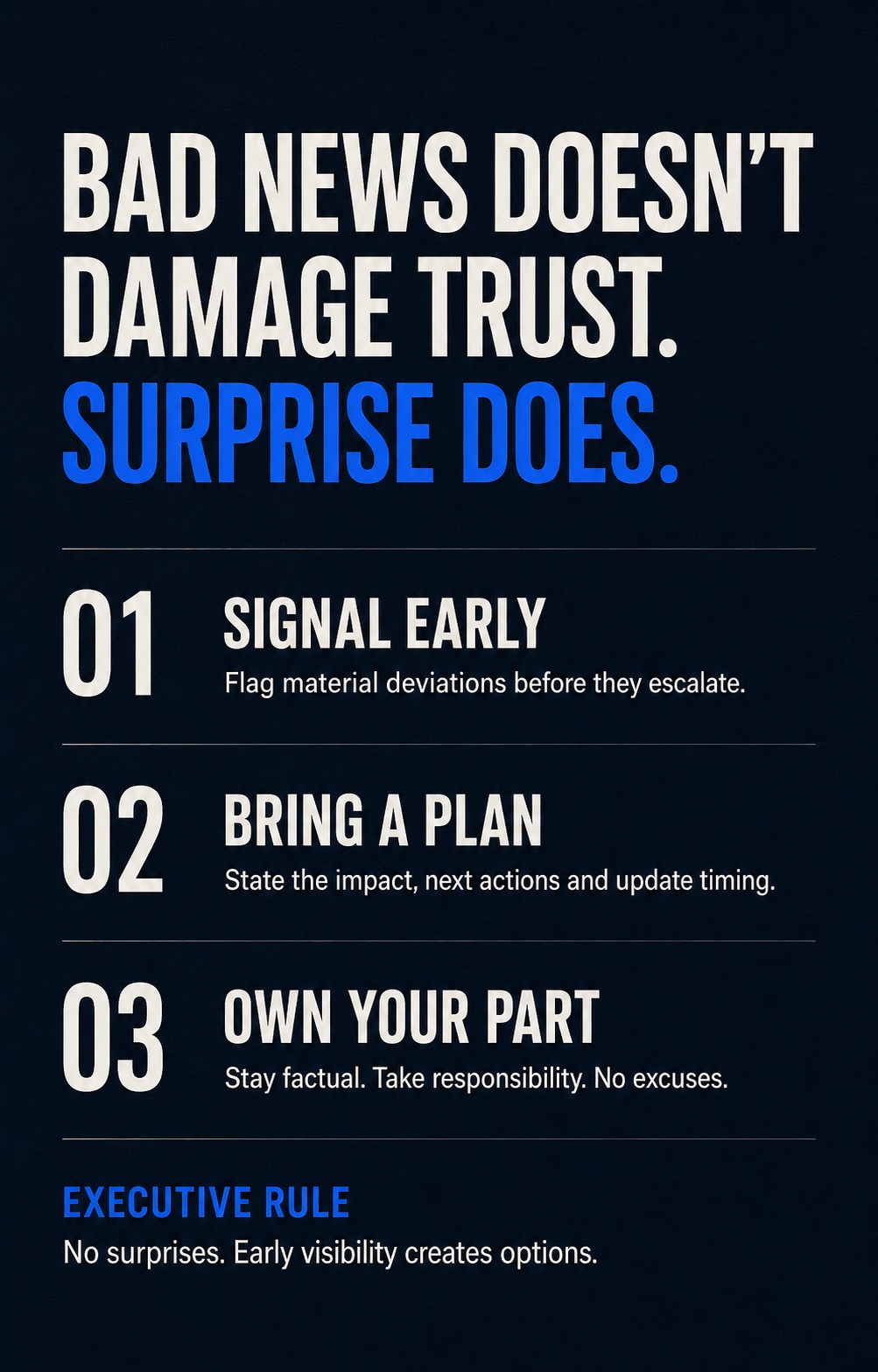
BAD NEWS DOESN'T
DAMAGE TRUST.
SURPRISE DOES.
SIGNAL EARLY
Flag material deviations before they escalate.
02
BRING A PLAN
State the impact, next actions and update timing.
03
OWN YOUR PART
Stay factual. Take responsibility. No excuses.
EXECUTIVE RULE
No surprises. Early visibility creates options.
new-card 0.16 existing / 0.20 inbox

Bildschirmfoto 2026-08-25 um 19.54.25.heic

Beste vorhandene Nähe: originale/08-effective-1-1s.jpeg

Beste Inbox-Nähe: Bildschirmfoto 2026-09-11 um 18.32.04.heic

Erkannten Text anzeigen
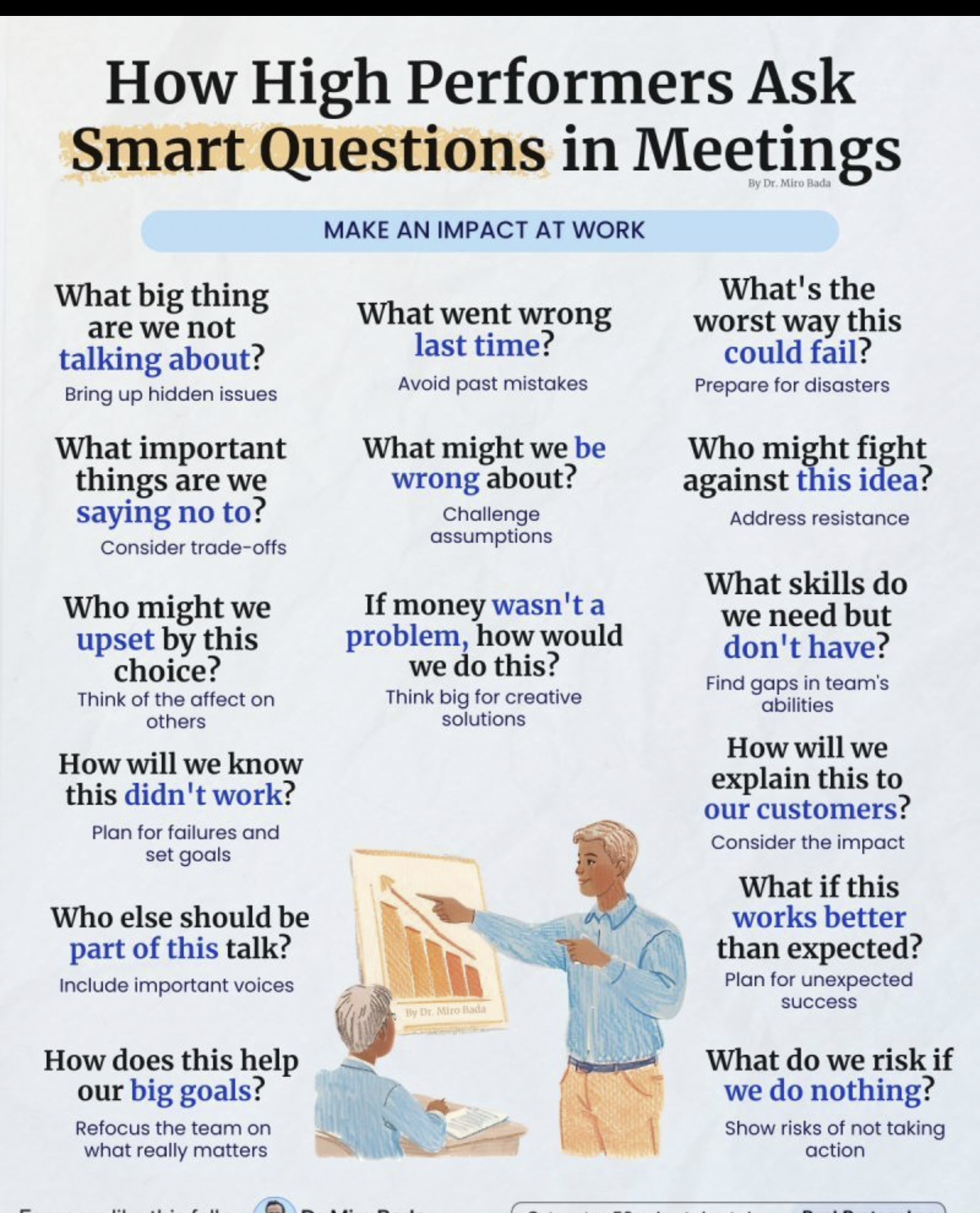
How High Performers Ask
Smart Questions in Meetings
MAKE AN IMPACT AT WORK
What big thing
are we not
talking about?
Bring up hidden issues
What important
things are we
saying no to?
Consider trade-offs
Who might we
upset by this
choice?
Think of the affect on
others
How will we know
this didn't work?
Plan for failures and
set goals
Who else should be
part of this talk?
Include important voices
How does this help
our big goals?
Refocus the team on
what really matters
What went wrong
last time?
Avoid past mistakes
What might we be
wrong about?
Challenge
assumptions
If money wasn't a
problem, how would
we do this?
Think big for creative
solutions
What's the
worst way this
could fail?
Prepare for disasters
Who might fight
against this idea?
Address resistance
What skills do
we need but
don't have?
Find gaps in team's
abilities
How will we
explain this to
our customers?
Consider the impact
What if this
works better
than expected?
Plan for unexpected
success
What do we risk if
we do nothing?
Show risks of not taking
action
new-card 0.25 existing / 0.27 inbox

Bildschirmfoto 2026-08-30 um 18.08.57.heic

Beste vorhandene Nähe: originale/08-effective-1-1s.jpeg

Beste Inbox-Nähe: Bildschirmfoto 2026-09-11 um 18.32.04.heic

Erkannten Text anzeigen
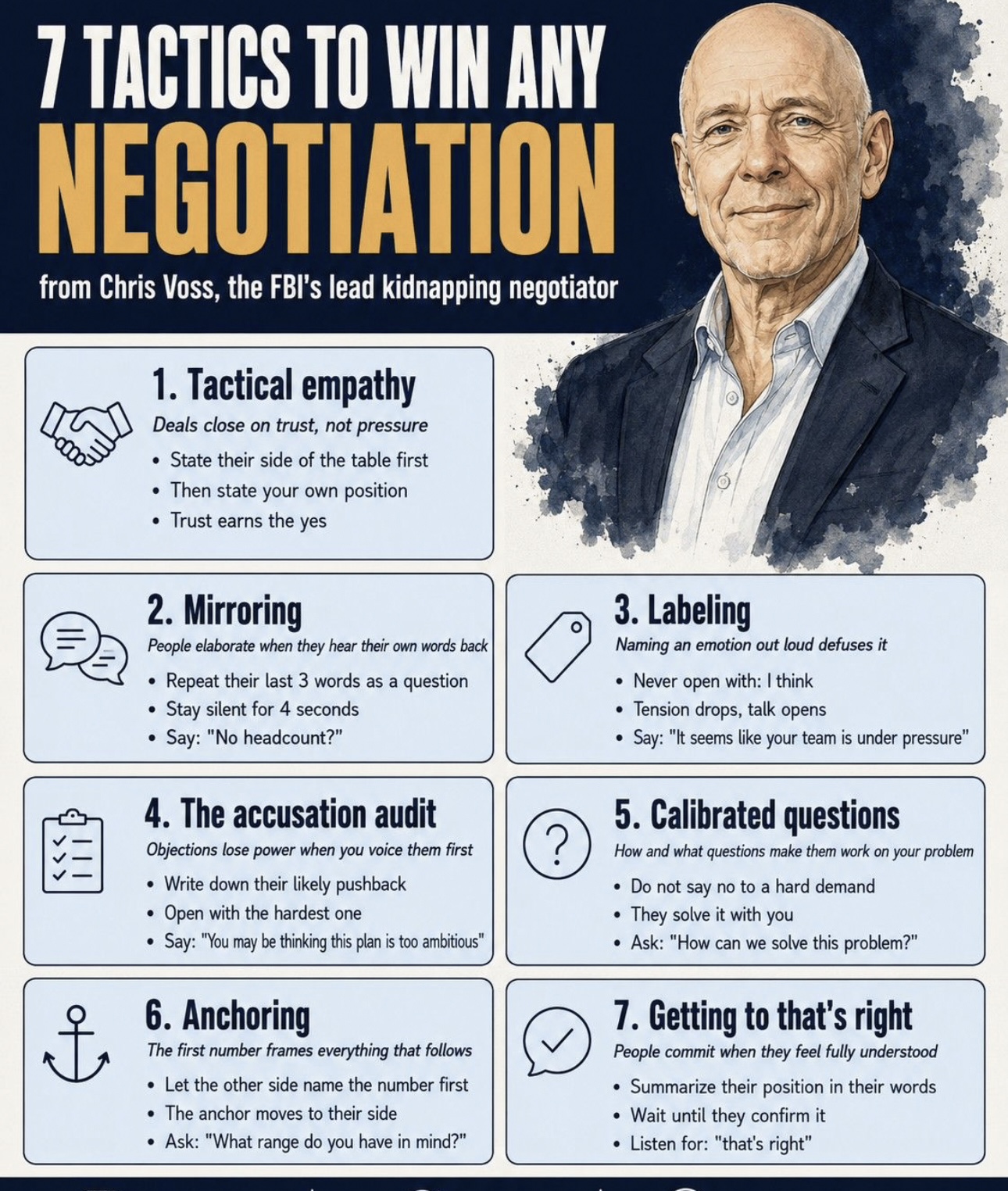
7 TACTICS TO WIN ANY
NEGOTIATION
from Chris Voss, the FBI's lead kidnapping negotiator
1. Tactical empathy
Deals close on trust, not pressure
• State their side of the table first
• Then state your own position
• Trust earns the yes
2. Mirroring
People elaborate when they hear their own words back
• Repeat their last 3 words as a question
• Stay silent for 4 seconds
• Say: "No headcount?"
4. The accusation audit
Objections lose power when you voice them first
• Write down their likely pushback
• Open with the hardest one
• Say: "You may be thinking this plan is too ambitious"
6. Anchoring
The first number frames everything that follows
• Let the other side name the number first
• The anchor moves to their side
• Ask: "What range do you have in mind?"
3. Labeling
Naming an emotion out loud defuses it
• Never open with: I think
• Tension drops, talk opens
• Say: "It seems like your team is under pressure"
5. Calibrated questions
How and what questions make them work on your problem
• Do not say no to a hard demand
• They solve it with you
• Ask: "How can we solve this problem?"
7. Getting to that's right
People commit when they feel fully understood
• Summarize their position in their words
• Wait until they confirm it
• Listen for: "that's right"
new-card 0.29 existing / 0.27 inbox

Bildschirmfoto 2026-09-11 um 18.32.04.heic

Beste vorhandene Nähe: originale/10-criticism-calm-method.jpeg

Beste Inbox-Nähe: Bildschirmfoto 2026-08-30 um 18.08.57.heic

Erkannten Text anzeigen
2
3
4
5
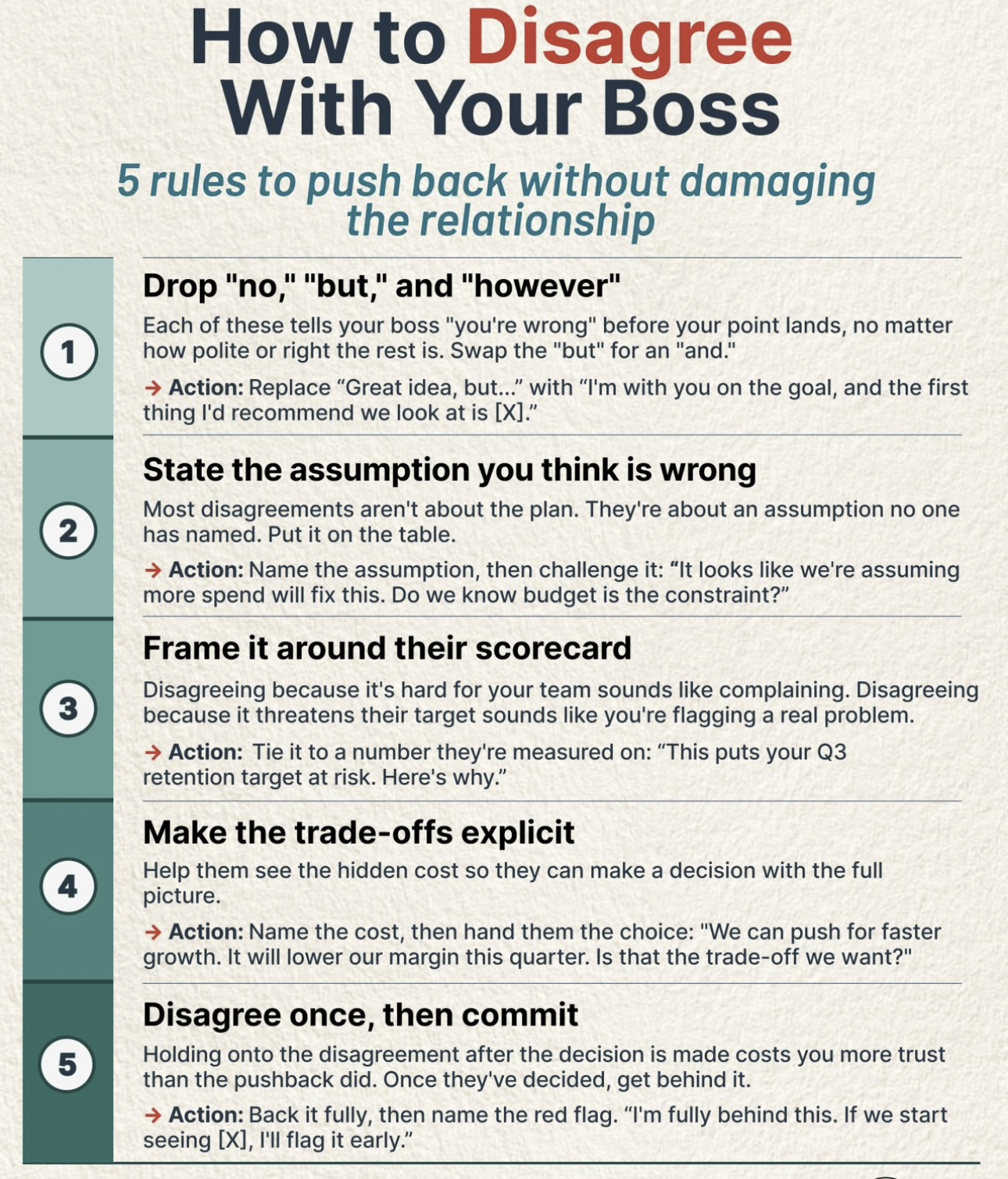
How to Disagree
With Your Boss
5 rules to push back without damaging
the relationship
Drop "no," "but," and "however"
Each of these tells your boss "you're wrong" before your point lands, no matter
how polite or right the rest is. Swap the "but" for an "and."
→ Action: Replace "Great idea, but.." with "I'm with you on the goal, and the first
thing I'd recommend we look at is [X]."
State the assumption you think is wrong
Most disagreements aren't about the plan. They're about an assumption no one
has named. Put it on the table.
→ Action: Name the assumption, then challenge it: "It looks like we're assuming
more spend will fix this. Do we know budget is the constraint?"
Frame it around their scorecard
Disagreeing because it's hard for your team sounds like complaining. Disagreeing
because it threatens their target sounds like you're flagging a real problem.
→ Action: Tie it to a number they're measured on: "This puts your Q3
retention target at risk. Here's why."
Make the trade-offs explicit
Help them see the hidden cost so they can make a decision with the full
picture.
→ Action: Name the cost, then hand them the choice: "We can push for faster
growth. It will lower our margin this quarter. Is that the trade-off we want?"
Disagree once, then commit
Holding onto the disagreement after the decision is made costs you more trust
than the pushback did. Once they've decided, get behind it.
→ Action: Back it fully, then name the red flag. "I'm fully behind this. If we start
seeing [X], I'll flag it early."
new-card 0.21 existing / 0.21 inbox

Bildschirmfoto 2026-09-11 um 18.33.30.heic

Beste vorhandene Nähe: originale/08-effective-1-1s.jpeg

Beste Inbox-Nähe: Bildschirmfoto 2026-09-11 um 18.32.04.heic

Erkannten Text anzeigen
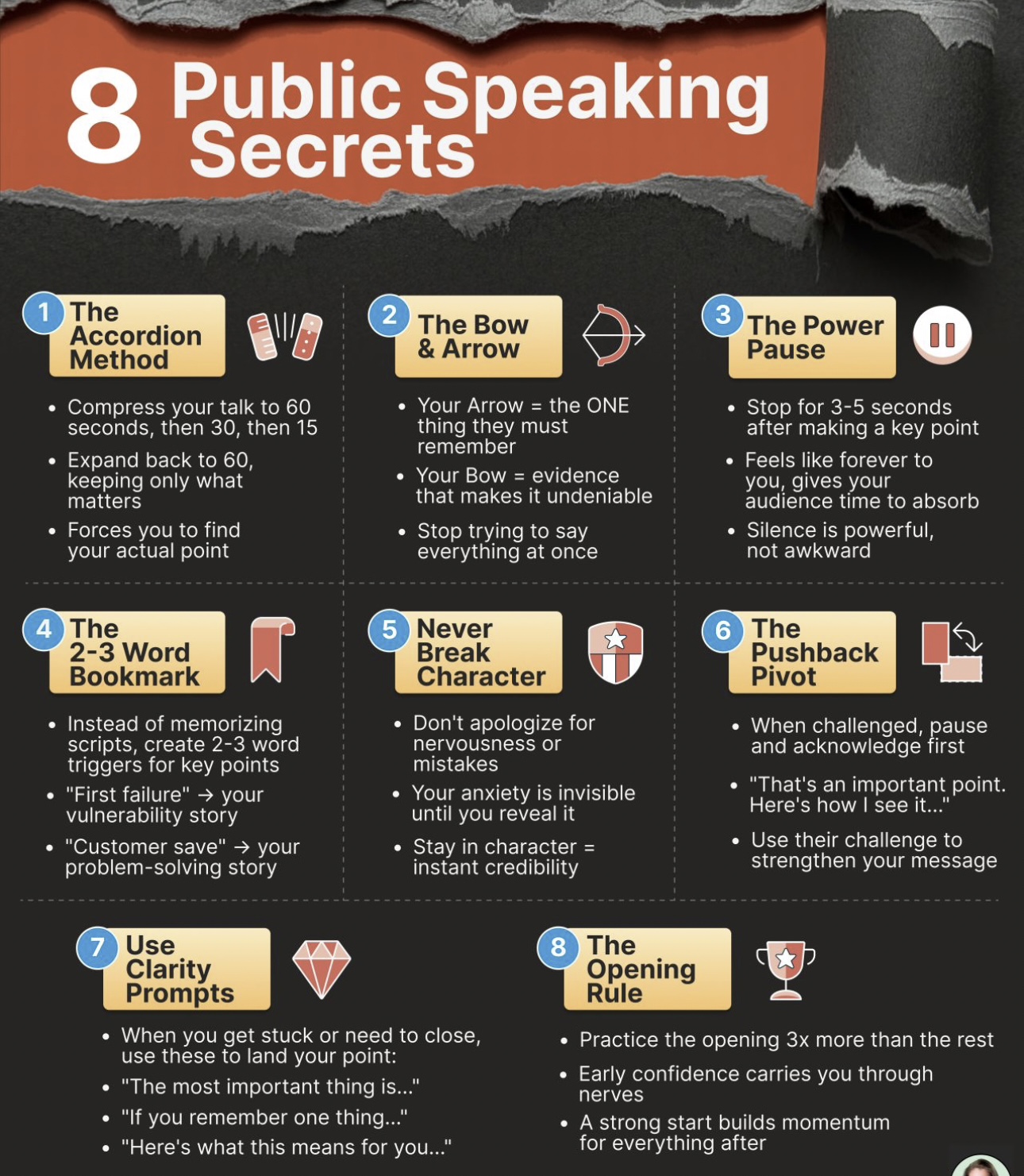
8
Public Speaking
Secrets
1
The
Accordion
Method
• Compress your talk to 60
seconds, then 30, then 15
• Expand back to 60,
keeping only what
matters
• Forces you to find
your actual point
4
The
2-3 Word
Bookmark
• Instead of memorizing
scripts, create 2-3 word
triggers for key points
• "First failure" → your
vulnerability story
• "Customer save" → your
problem-solving story
7 Use
Clarity
Prompts
• When you get stuck or need to close,
use these to land your point:
• "The most important thing is..."
• "If you remember one thing..."
• "Here's what this means for you..."
2
The Bow
& Arrow
→
• Your Arrow = the ONE
thing they must
remember
• Your Bow = evidence
that makes it undeniable
• Stop trying to say
everything at once
5
Never
Break
Character
• Don't apologize for
nervousness or
mistakes
• Your anxiety is invisible
until you reveal it
• Stay in character =
instant credibility
8
3
The Power
Pause
• Stop for 3-5 seconds
after making a key point
• Feels like forever to
you, gives your
audience time to absorb
• Silence is powerful,
not awkward
6
The
Pushback
Pivot
• When challenged, pause
and acknowledge first
• "That's an important, point.
Here's how I see it..
• Use their challenge to
strengthen your message
The
Opening
Rule
• Practice the opening 3x more than the rest
• Early confidence carries you through
nerves
• A strong start builds momentum
for everything after